In June 2026, one of the world’s largest pharmaceutical companies, Novo Nordisk, became the target of a major cyberattack that highlights how modern threats have evolved far beyond traditional data breaches.
The stolen records impact intellectual property, research pipelines, and long-term strategic risk.
Below, we break down what happened, what was exposed, and what this breach highlights about the future of cybersecurity.
Table of Contents
What Happened
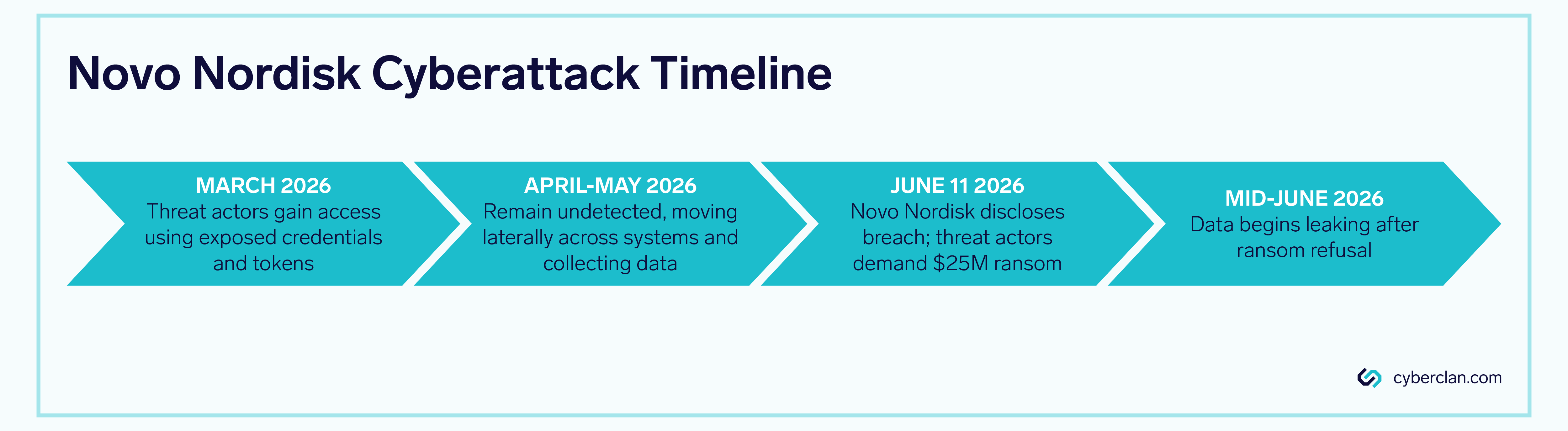
Novo Nordisk disclosed a cybersecurity incident on June 11, 2026, confirming that threat actors had gained unauthorized access to a limited number of internal IT systems.
Shortly after, a cyber extortion group known as FulcrumSec claimed responsibility, stating that it had spent more than two months inside the company’s network before exfiltrating data.
The group demanded a $25 million ransom in exchange for not publishing the data. When the Danish pharmaceutical giant refused, the threat actors began releasing samples and signaling plans to sell portions of the stolen information.
It follows the now-common double extortion ransomware model:
- Initial access
- Data theft
- Encryption
- Ransom demand
- Threat to leak or sell the data if refused
What was Stolen
The scale and sensitivity of the stolen data are what makes this incident stand out.
Cybercriminals claimed to have exfiltrated approximately 1.3 terabytes of data, consisting of hundreds of thousands of files.
The data reportedly includes:
-
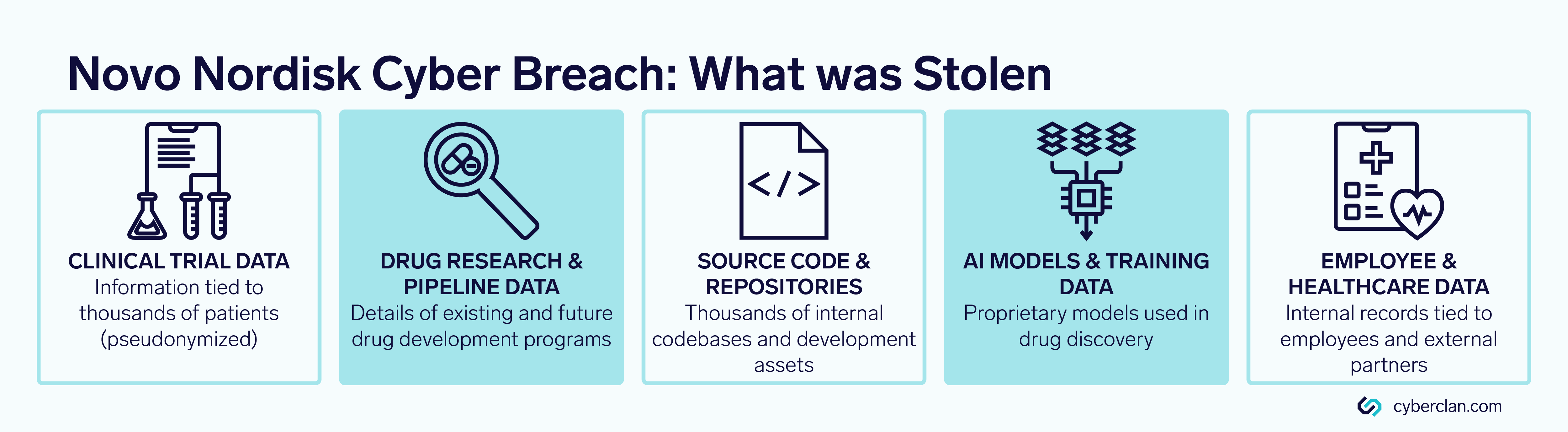
- Clinical trial data tied to thousands of participants
- Proprietary research and drug development data, including pipeline programs
- Source code and internal repositories
- Employee, physician, and patient-related data
- Production and manufacturing information
- Internal AI models and datasets used in drug development
In some reports, cybercriminals also claimed access to:
-
- 4,000+ code repositories
- Tens of thousands of proprietary drug compounds
- Dozens of trained AI models
While Novo Nordisk confirmed that some patient data was accessed, it stated that this information was pseudonymized and not directly tied to identities, which reduces, but does not eliminate the risk.
How the Attack Happened
Although the full technical details are still under investigation, reporting suggests that the breach did not rely on highly sophisticated methods.
Instead, threat actors allegedly gained initial access through:
-
- Exposed credentials and access tokens
- GitHub access tokens embedded in client-side code
- Cloud misconfigurations and API credentials
These entry points allowed threat actors to:
-
- Access internal repositories
- Extract additional credentials
- Move laterally across multiple systems
- Exfiltrate large volumes of sensitive data
The main takeaway from this breach is that it resulted from weaknesses in identity, access, and credential management rather than sophisticated attacks on security controls. Threat actors exploited exposed tokens and credentials already present in the environment, demonstrating a shift in the threat landscape where trusted identities are abused rather than technical vulnerabilities.
For organizations, this means that the challenge now involves not only preventing unauthorized access but also continuously validating and monitoring legitimate access. As cloud environments and third-party integrations expand, identities and access tokens have become critical assets for both threat actors and defenders.
Why This Breach is Different
While many breaches focus on personal data, this incident is fundamentally different.
1. It Targets Intellectual Property
This breach exposed:
-
- Drug research
- Clinical trial results
- AI models used in drug discovery
This type of data represents years of R&D investment and future competitive advantage.
2. It Creates Long-Term Business Risk
Unlike stolen credentials or payment data, the assets exposed in this breach represent years of scientific research, innovation, and investment. Once intellectual property is exposed, there is no simple recovery process.
This information:
-
- Cannot be easily rotated, reset, or replaced
- May impact ongoing research and future drug development.
- Could reveal proprietary methods and strategies that competitors or malicious actors might exploit, undermining exclusivity and the competitive edge gained from years of investment in R&D
The consequences of this exposure can impact future innovation, market positioning, partnerships, and shareholder value. The breach represents a strategic, long-term risk rather than just an operational issue.
3. It Impacts an Entire Ecosystem
Pharmaceutical companies are deeply interconnected with:
-
- Healthcare providers
- Research institutions
- Regulators
- Supply chains
A breach at this level creates downstream risk across the ecosystem, not just for the company itself.
4. It Highlights the Rise of Data Extortion
This breach was about leverage, not encryption.
Cybercriminals:
-
- Focused on high-value data
- Used it to pressure the organization
- Transitioned to selling it when ransom failed
This is what the new ransomware model looks like.
Potential Impact
The full impact of the breach is still unfolding, but key risks include:
Research and Innovation Risk
-
- Exposure of proprietary drug pipelines
- Potential replication or misuse of AI models
- Loss of competitive advantage
Regulatory and Compliance Risk
-
- Exposure of clinical trial data triggers GDPR and healthcare regulations
- Potential investigations by regulators
- Increased scrutiny from industry partners
Trust and Reputation Risk
-
- Patients and trial participants may lose confidence
- Healthcare partners may reassess data-sharing relationships
- Investor confidence may be affected
Financial Risk
-
- Incident response and remediation costs
- Potential legal and regulatory penalties
- Long-term impact on product development timelines
Key Lessons for Organizations
1. Identity Security is Critical
The Novo Nordisk breach reinforces that:
-
- Credentials are becoming a primary (or preferred) attack vector
- Secrets and tokens must be secured, rotated, and monitored
2. Protect What Matters Most
Not all data is equal. Organizations must:
-
- Identify high-value assets (IP, research, AI models)
- Apply stronger controls to those environments
3. Assume Data Will be Exfiltrated
Modern threat actors don’t just access systems; they steal data.
Security strategies must include:
-
- Data loss prevention
- Monitoring for abnormal data movement
- Rapid detection and response
4. Third-Party and Cloud Risk Must be Managed
Cloud environments, APIs, and development tools create:
- New attack surfaces
- New identity risks
- New paths for lateral movement
Final Thoughts
The Novo Nordisk breach marks a shift in how cybercriminals operate and what they target.
Today’s most damaging breaches aren’t about how many records are stolen, but about what those records represent.
For many organizations, that means:
-
- Intellectual property
- Innovation pipelines
- Business-critical data
And once that data is exposed, it can’t be recovered.
Need Help Assessing Your Risk?
If your organization relies on cloud platforms, third-party integrations, or sensitive business or research data, it’s worth taking a closer look at where your exposure is.
Now is the time to strengthen your defences, before threat actors test them for you.