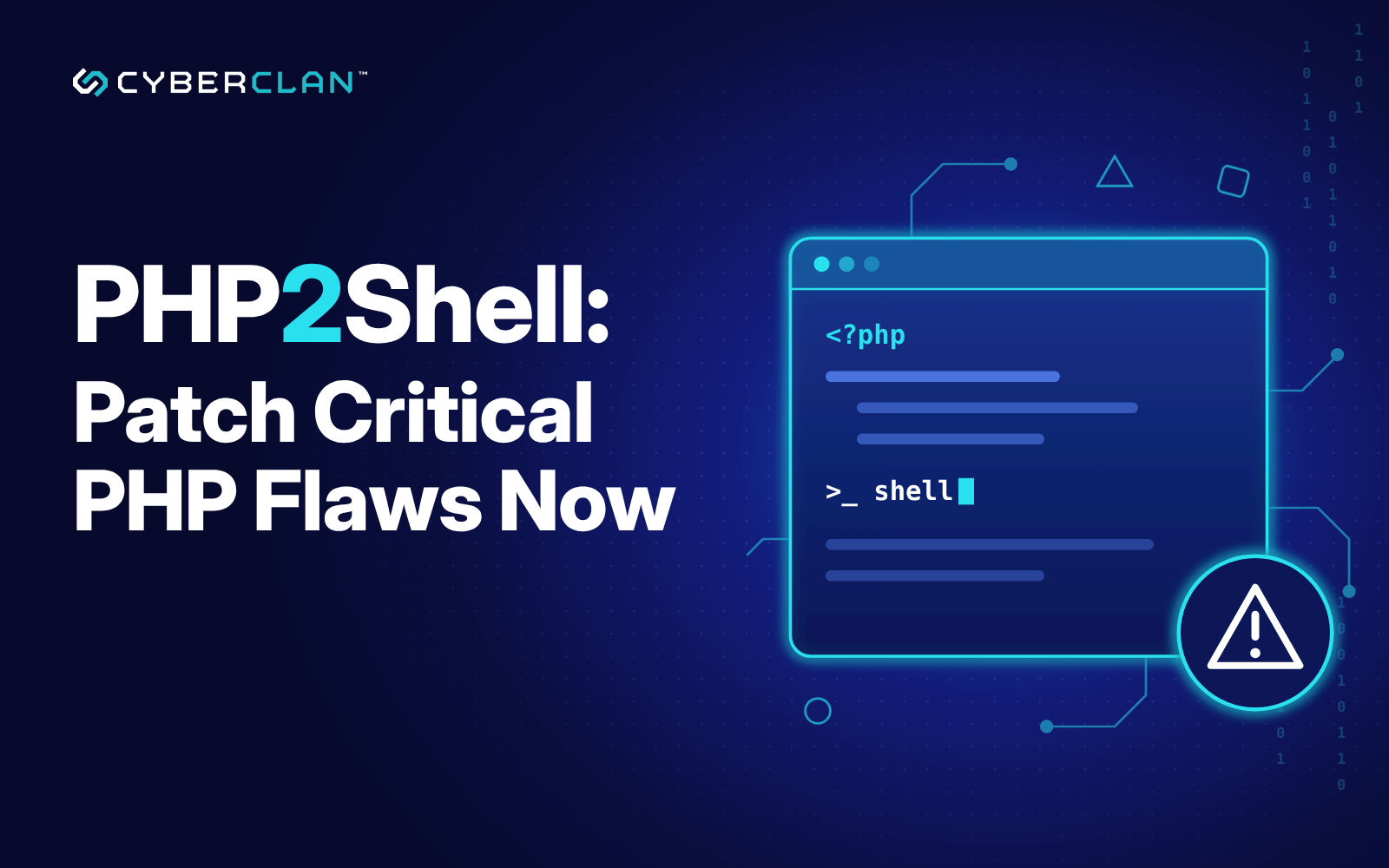
CVE-2026-109618 and CVE-2026-109619 allow unauthenticated remote code execution on web servers running PHP.
Severity: Critical (CVSS 9.2)
Two vulnerabilities in the core PHP engine can let an attacker run code on a web server without logging in. Patches are available. Organizations running PHP should update immediately.
Executive Summary
On October 21, 2026, the PHP project released emergency security updates for two critical vulnerabilities, collectively known as “PHP2Shell”. Both flaws sit in the PHP engine itself, not in any single website or plugin, and can allow an unauthenticated attacker to execute code remotely on an affected server.
Technical details leaked publicly on October 20, ahead of the planned disclosure, and proof-of-concept exploit code now exists. Government agencies, including the U.S. Cybersecurity and Infrastructure Security Agency (CISA) and the UK National Cyber Security Centre (NCSC), have urged organizations to patch without delay.
PHP runs roughly 70% of websites, including WordPress, Drupal, Joomla, Magento and Laravel applications, so the exposure is broad. Every organization with internet-facing PHP should assess its systems now.
The Vulnerabilities
- CVE-2026-109618 – Remote code execution via memory corruption during PHP’s out-of-memory handling.
- CVE-2026-109619 – Remote code execution via stale state that PHP keeps after the related memory has been freed.
Both are rated 9.2 (Critical) under CVSS v4.0. Every PHP version from 5.4 (2012) onward is affected in default configurations, across all common setups: Apache mod_php (considered highest risk), PHP-FPM, php-cgi, LiteSpeed and FrankenPHP. Because exploitation can happen before any application code runs, application-level security controls do not stop it.
Why This Matters
- No login is required. A single crafted web request can be enough.
- Public proof-of-concept code exists, and security vendors have reported exploitation attempts in the wild since October 21.
- A related flaw can leak memory from other users’ requests, potentially exposing passwords, session tokens or API keys.
- A compromised server can lead to data theft, malware or ransomware deployment, and movement deeper into your network.
- Many appliances and vendor products bundle PHP without advertising it, so exposure may be wider than you expect.
Fixed Versions
| PHP branch | Official fix | Update to |
|---|---|---|
| 8.5 | Yes | 8.5.12 |
| 8.4 | Yes | 8.4.27 |
| 8.3 | Yes | 8.3.36 |
| 8.2 | Yes | 8.2.35 |
| 8.1 and older | No | Check your OS vendor for backports; plan an upgrade |
If you install PHP through your operating system’s package manager, apply your vendor’s updated packages as they become available.
Recommended Actions
- Identify every system running PHP, including websites, portals, control panels and appliances that bundle it.
- Check installed versions against the fixed releases above.
- Apply official patches immediately, starting with internet-facing systems.
- For PHP 8.1 and older, confirm vendor backports or restrict internet access until you can upgrade.
- Confirm the update worked with a vulnerability scan.
- Review web server logs for crashes, unusual errors or unexpected processes.
- Check servers for signs of compromise, such as web shells, unexpected files or new admin accounts.
- Make sure Endpoint Detection and Response (EDR) is active on web servers.
- Ask hosting and SaaS providers to confirm they have patched.
Who Should Be Concerned?
- Organizations running WordPress, Drupal, Joomla or Magento sites
- Businesses with custom PHP or Laravel applications
- Users of shared hosting or web hosting control panels
- Managed hosting providers
- Anyone operating appliances or vendor products that include PHP
CyberClan’s Recommendation
Treat PHP2Shell as a top-priority remediation item. If your environment includes PHP-based applications, confirm your versions, apply patches, run vulnerability scans and review logs for indicators of compromise.
Where patching cannot happen right away, put compensating controls in place, such as web application firewall (WAF) protection and increased monitoring, and limit internet exposure until remediation is complete. These measures reduce risk but are not a substitute for patching.
Sources:
This brief is provided for informational purposes and reflects information available at the time of publication.
Need Help Assessing Your Exposure?
CyberClan can help identify vulnerable systems, validate patch status, carry out compromise assessments and implement remediation plans.
CyberClan can help identify vulnerable systems, validate patch status, carry out compromise assessments and implement remediation plans.
Suspect a compromise? Call our 24/7 Incident Response Hotline:
Under Attack? Guaranteed 15 minute response time.
Please call our emergency hotline below or fill out the form with your name, email, and phone number.
US/CA – 1 800 762 3290
UK – 0800 368 8731
AU – 61 1800 413 128